
How one local woman is doing her part for the conservation and continued existence of the majestic monarch.
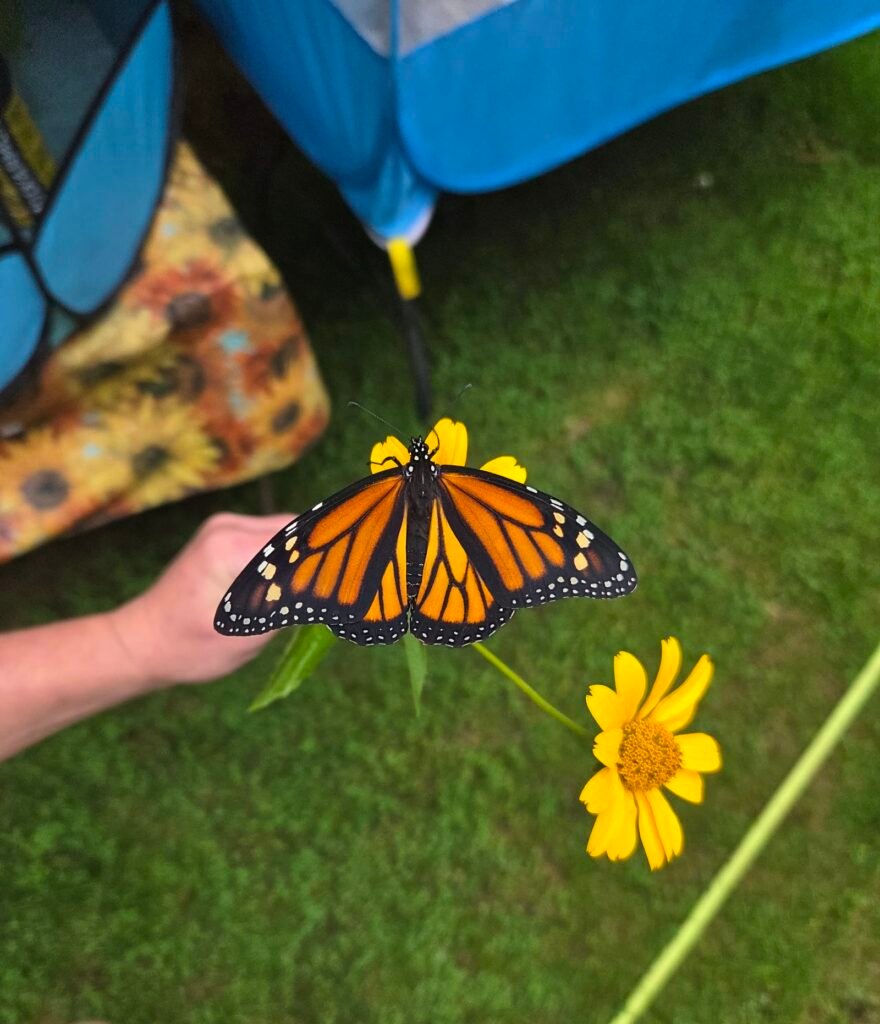
On Marissa Barcomb’s best day this summer, ten monarch butterflies left her yard.
Not all at once — one by one, the way it always goes. She opens the mesh enclosure, coaxes each new butterfly onto a flower — often in her big raised flower bed, where they roost on the marigolds — and lets it decide when it’s ready. Some go straight up into the sky. Some sit a while. This year there were more than 120 of them, the most she has ever raised, and she did it with a baby in the house and, by her own cheerful admission, more caterpillar cleaning than most people would sign up for.
She stopped counting chrysalises at 80. The releases just kept coming.
It started with one egg
Marissa grew up in flower beds. Her mother and grandmother were both gardeners, and as a young girl she helped tend the family flowers, knowing that one day, with a yard of her own, she’d have a garden too.
The butterflies came in the summer of 2020, when she and her partner were living with his mother in Dexter. The yard there was big and sunny, the garden prolific, and her partner’s mother was the one who opened her eyes to what was happening to the monarchs — how threatened the species had become. She taught Marissa what a monarch egg looks like, and that the caterpillars eat one thing and one thing only: milkweed.
A few milkweed plants popped up in the backyard that summer. Every day, the two of them checked the undersides of the leaves, looking for an egg. Weeks went by. Nothing.
“After about a month of checking the plants we finally found an egg,” she says.
They clipped the leaf, stood it stem-down in a shallow cup of water in an outdoor enclosure, and waited. A few days later it hatched — a caterpillar smaller than a grain of rice. Marissa gathered milkweed for it as it grew, waited with her future mother-in-law through the chrysalis, and was there on the day the enclosure held a butterfly instead.
“I will always remember watching her take the mesh screen off the top of the enclosure and the butterfly taking flight up into the beautiful sunny day,” she says. “That summer was a learning point for how fragile their species was, and I felt like we made an impact with just raising that one butterfly. I felt like it was a calling for me to do my part from that moment on.”
When she and her partner bought their own house — just outside the village of Felts Mills, on Cemetery Road, an 11-acre wooded lot — she wanted milkweed close. She found a patch growing along the Black River, dug up a plant, and potted it. When she came back to it a few days later, it already had monarch caterpillars on it.
“I figured it was a sign,” she says, “and they found me.”
From a laundry basket to three enclosures
Her first setup was a soft mesh collapsible laundry basket from the dollar store, set inside a cardboard box over vases of milkweed. It worked for two years. It was not, she learned, nearly enough room for what she was bringing in.
Today the operation runs in stages, sorted by size. Eggs and the tiniest caterpillars — the first and second instars, in butterfly-raising language — start in the little laundry basket. The middle stages move to a pop-up playpen (the zip-top kind sold for cats and dogs). The fifth and final instars, the big caterpillars about to transform, graduate to an eight-foot mesh tent she first used for raising baby chicks. In every enclosure, milkweed cuttings stand in milk jugs of water, stems threaded through holes in the caps.
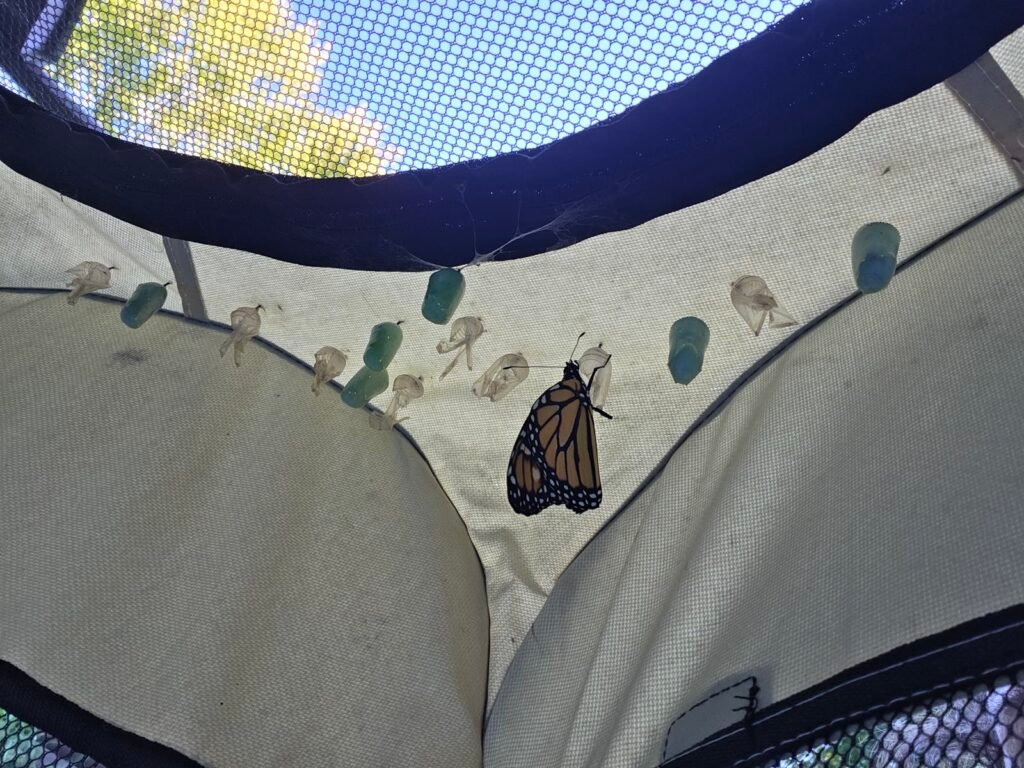
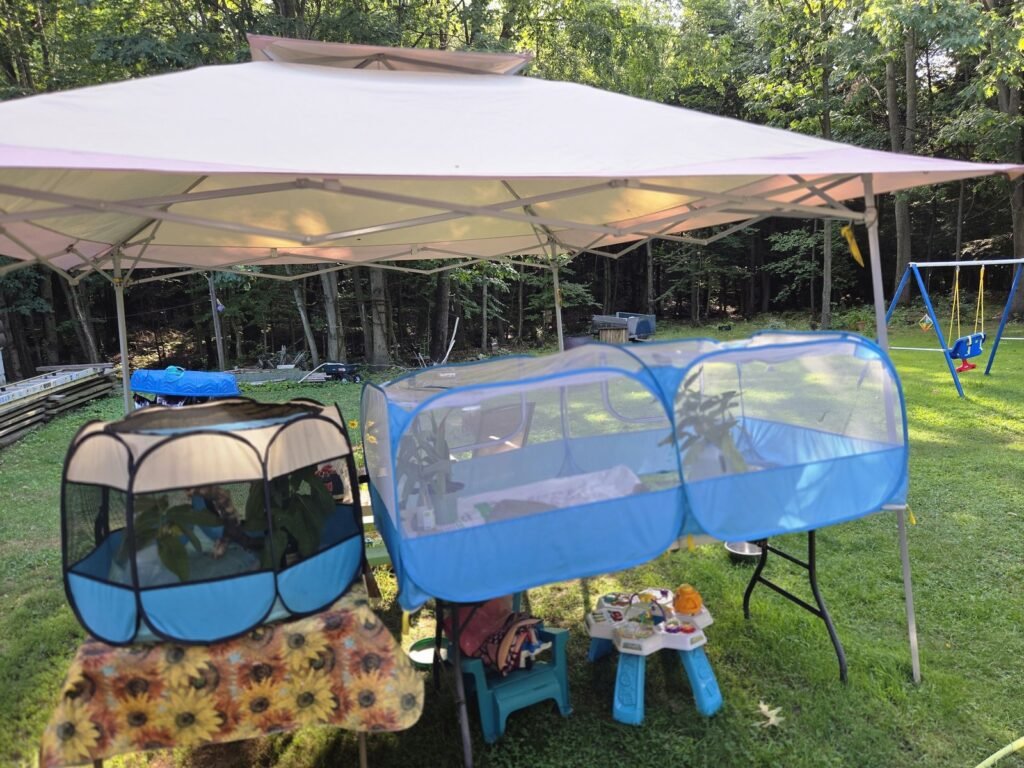
It is, she is the first to tell you, real work at her scale. Housing 50 to 100 caterpillars across three months is nothing like raising a dozen. Enclosures need daily cleaning — “the bigger they get, the bigger their poop is,” she laughs — and caterpillars found already hatched in the wild go into a separate enclosure of their own, so any disease they might carry never reaches the ones she raised from eggs. This year, she had no disease problems at all.
Egg to butterfly in about a month
Warmth runs the whole schedule. An egg hatches in three to five days, sooner when the days stay above 75 degrees. The caterpillar that emerges eats and grows for roughly one to two weeks, shedding its skin as it moves through five stages. Then comes the part Marissa guards most carefully.
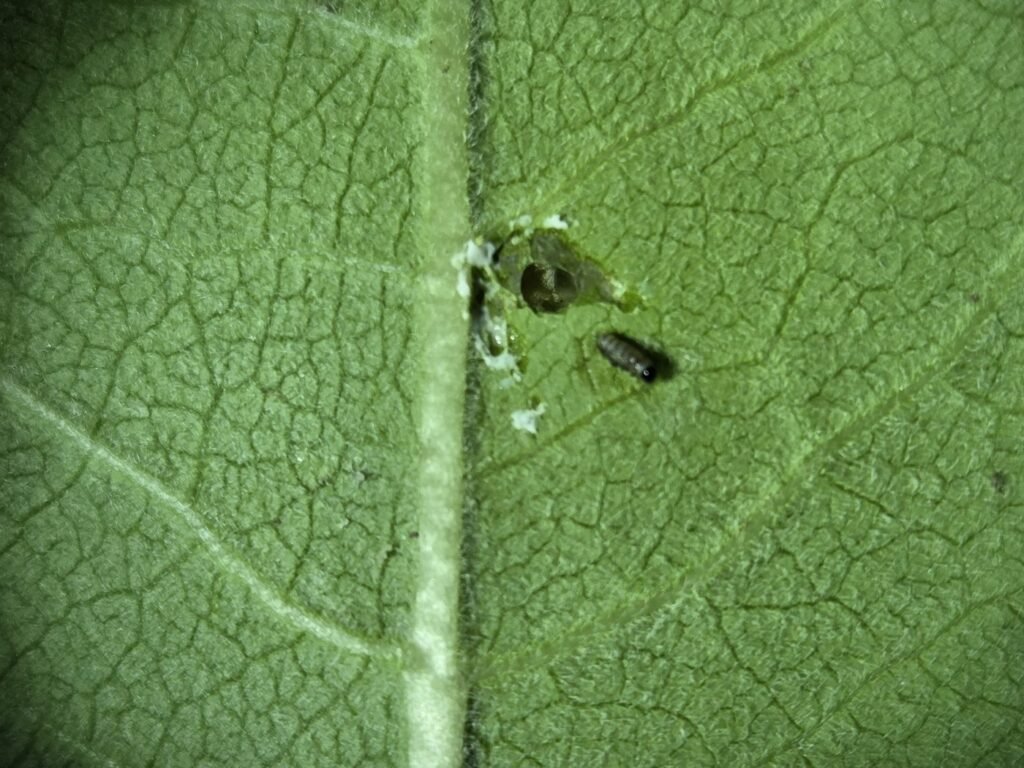
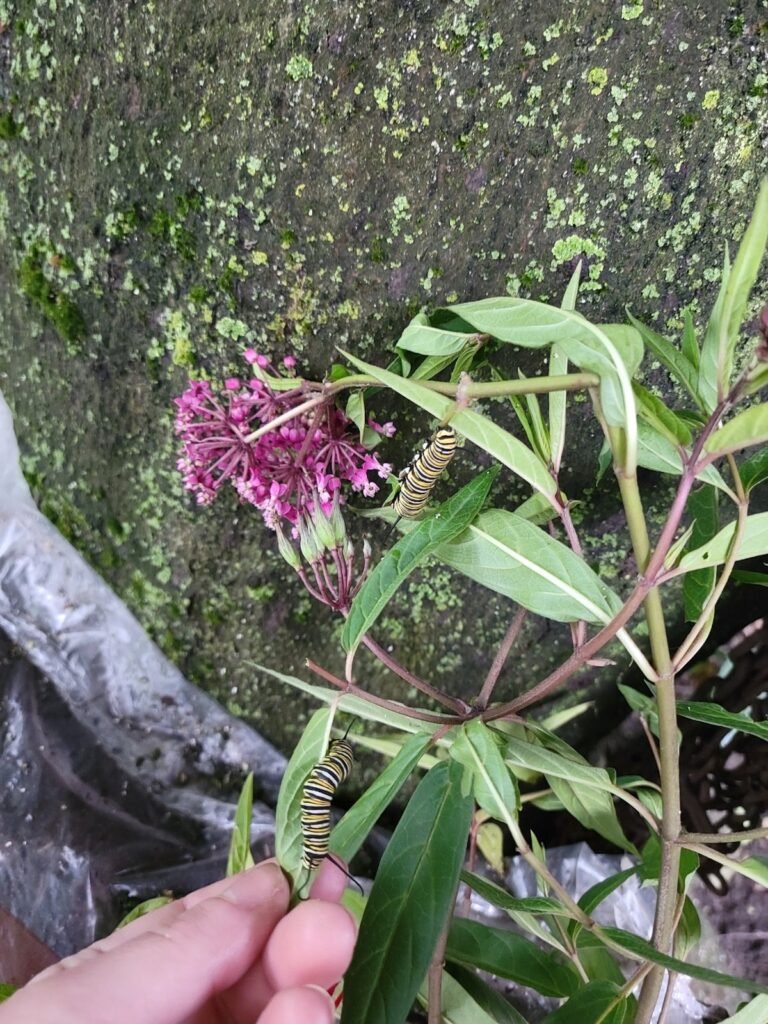
A caterpillar ready to transform hangs upside down in a “J” — and in that position, and in the first two days after the chrysalis forms, it is at its most vulnerable. Disturb one then, and the chrysalis can warp as it hardens and the butterfly inside is lost. “You really have to look before you touch,” she says — a first instar is so small you could crush it moving a leaf.
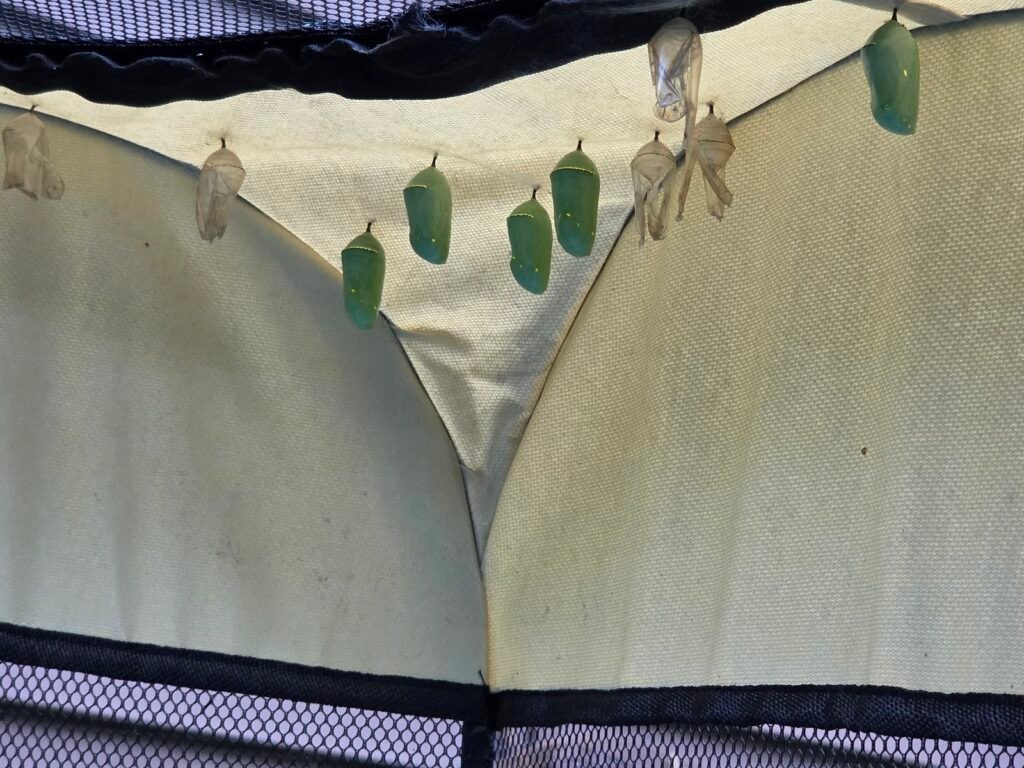
One to two weeks later, the butterfly emerges, crumpled-winged, and hangs for about five hours while fluid pumps through its wings and they expand and dry. This year she learned to tell the males from the females, and discovered something she’d never seen in six summers: her caterpillars eating the milkweed pods, not just the leaves. There is always something new.
The ones leaving now are going to Mexico
The butterflies Marissa released in late summer are a different kind of monarch from the ones she raised in June. The year’s earlier generations live a few weeks, mate, and lay the eggs that become the next generation. The last generation of the season — the one now passing over Northern New York — enters a kind of suspended state and lives eight to nine months, because it has somewhere to be.
That somewhere is up to 3,000 miles away: a few mountain forests of oyamel fir in Michoacán, Mexico, where eastern monarchs overwinter clustered in the trees. They navigate by the sun and an internal magnetic sense, cover 50 to 100 miles on a good day, and roost in trees at night. None of them has ever made the trip before.
“The most amazing thing is how far they are able to travel given how fragile they are,” Marissa says. “The generations within the same year all have a built-in compass they were born with that helps them navigate. Between their genetic makeup and following the sun in the sky, it truly is remarkable.”
Northern New York sits right in the corridor. Any monarch drifting over a Jefferson County field this month is at the start of that journey.
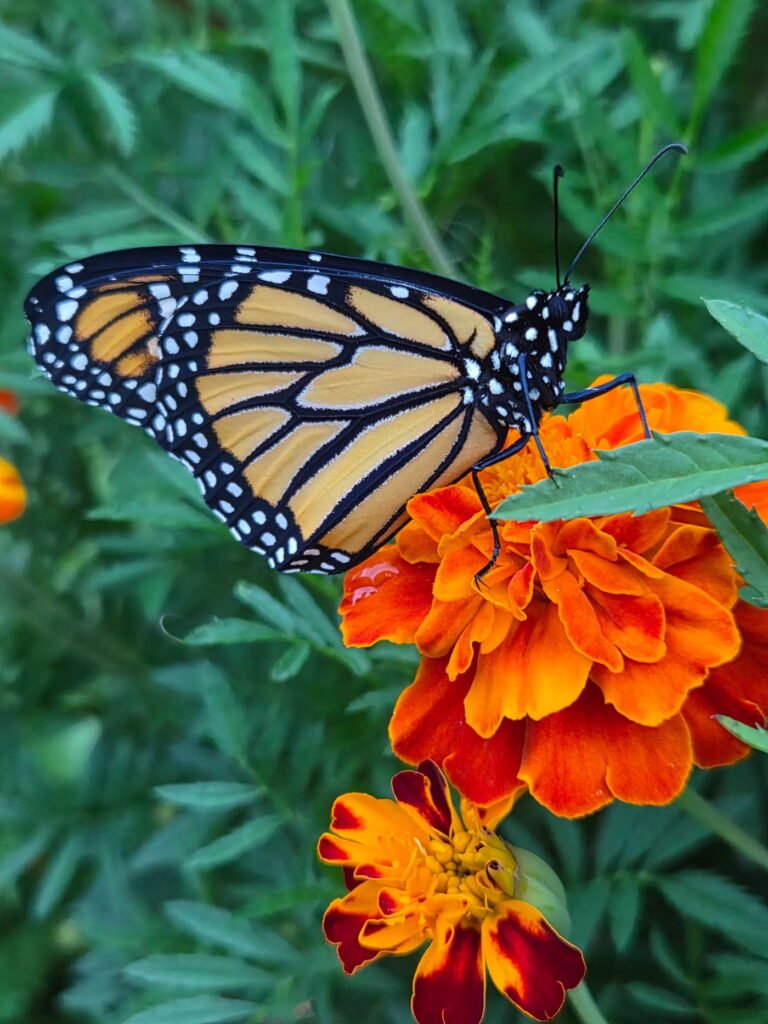
What she’d tell a neighbor
Ask Marissa the biggest danger monarchs face and she doesn’t hesitate: the loss of habitat, and milkweed cut down or sprayed with pesticides. “If there is no milkweed, the butterflies won’t stand a chance, since it is their only host plant.”
Her own yard is becoming the counter-argument. Milkweed pops up freely around the house on her 11 acres; she plants native flowers alongside it. She has looked into registering the yard as an official certified Monarch Waystation — she already meets the main criteria — and plans to apply this coming year. She also wishes she had tagged some of this year’s butterflies (a Monarch Watch program that tracks the migration), a plan for next season.
And yes, she believes an everyday person can make a real difference. Her advice to a neighbor who wants to try is the same advice she gives herself about everything in this work — start small:
“Start out small with just a couple caterpillars and make sure you have plenty of milkweed ready to go… and keep them out of direct sunlight!”
Most of all, she’d like people to stop pulling the “weeds.” “If people stopped pulling the ‘weeds’ and native plants,” she says, “our pollinators and ecosystem would be stronger, and we wouldn’t risk losing the monarchs along with many other species.”
Six summers after one egg in a Dexter backyard, that’s the whole of her philosophy: the butterflies found her; the least any of us can do is leave them something to find.
Marissa’s seasons, by her count
- 2020 — the first one, in Dexter
- 2021 — 20 released
- 2022 — 70+
- 2023 — 60
- 2024 — a light year; with milkweed all around the house, she mostly let nature take its course
- 2025 — 20–30, with a newborn at home
- 2026 — 120+ (best single day: 10 releases)
Monarch quick facts
- Egg to butterfly takes about four weeks in warm weather; our region raises three to four generations a summer.
- Milkweed is the monarch’s only host plant — caterpillars eat nothing else. Figure roughly one large plant per caterpillar.
- Monarchs are not federally listed as endangered; the U.S. Fish & Wildlife Service proposed threatened status in December 2024, with a final decision due by June 2030. They are on the IUCN Red List as Endangered.
- The eastern overwintering grounds in Mexico covered 2.93 hectares last winter, up from 0.9 — progress, against a recovery target of at least 6.
- No permit is needed to raise monarchs at home in New York. To go further: Monarch Watch runs the tagging program and the Monarch Waystation registry; the Monarch Joint Venture publishes raising and habitat guidance.
Photos and video by Marissa Barcomb.
More of Marissa’s monarchs
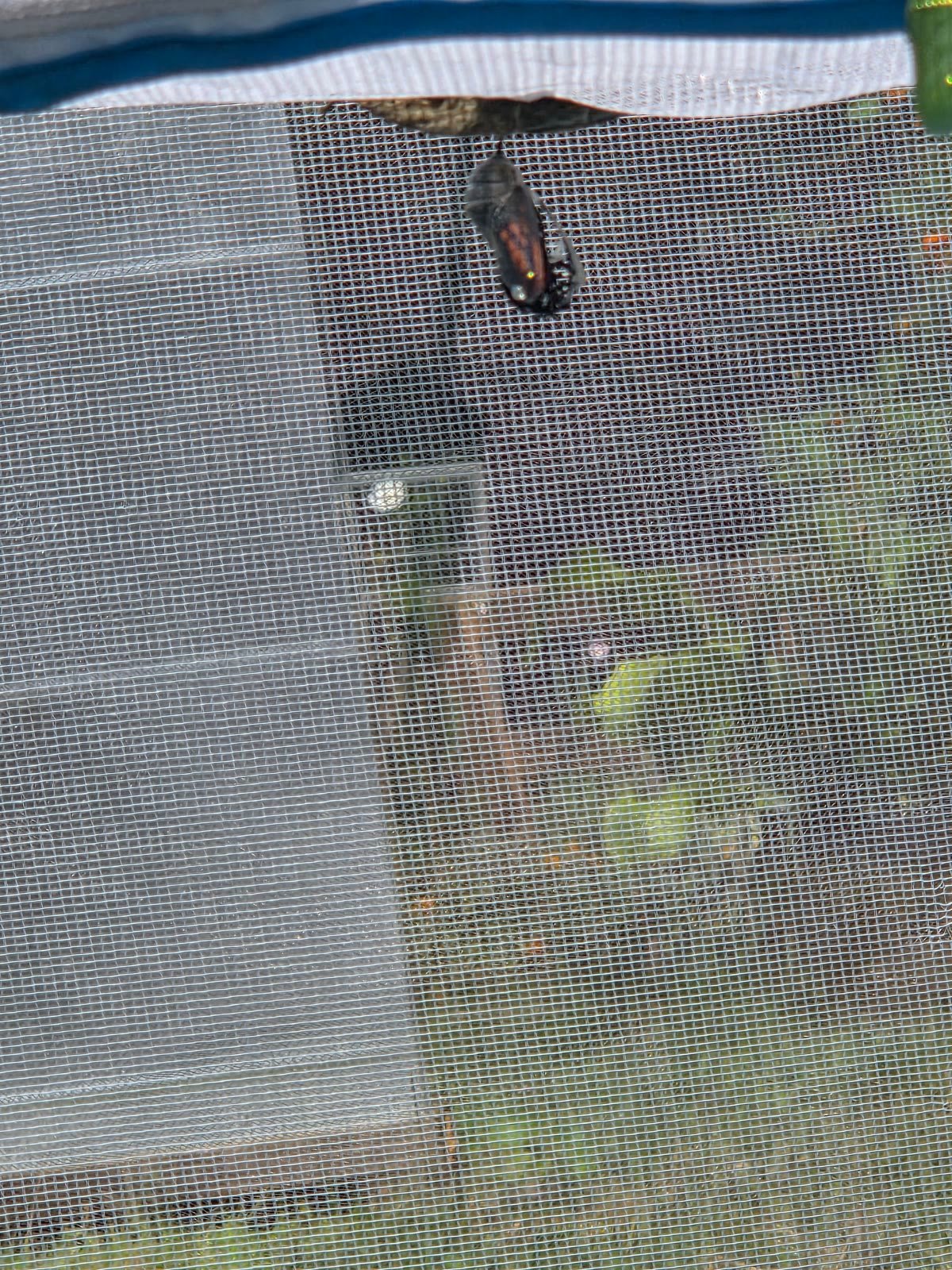
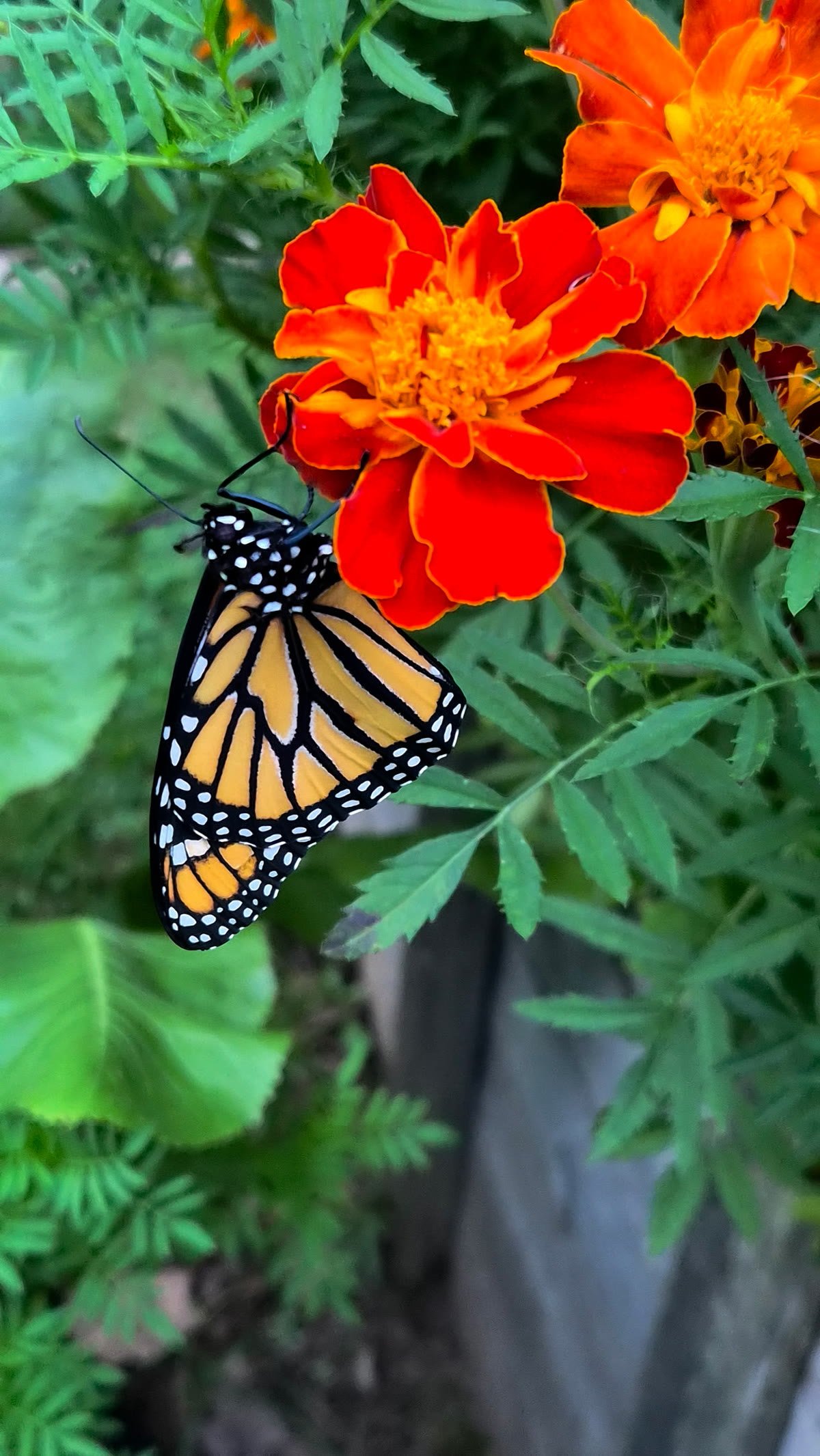
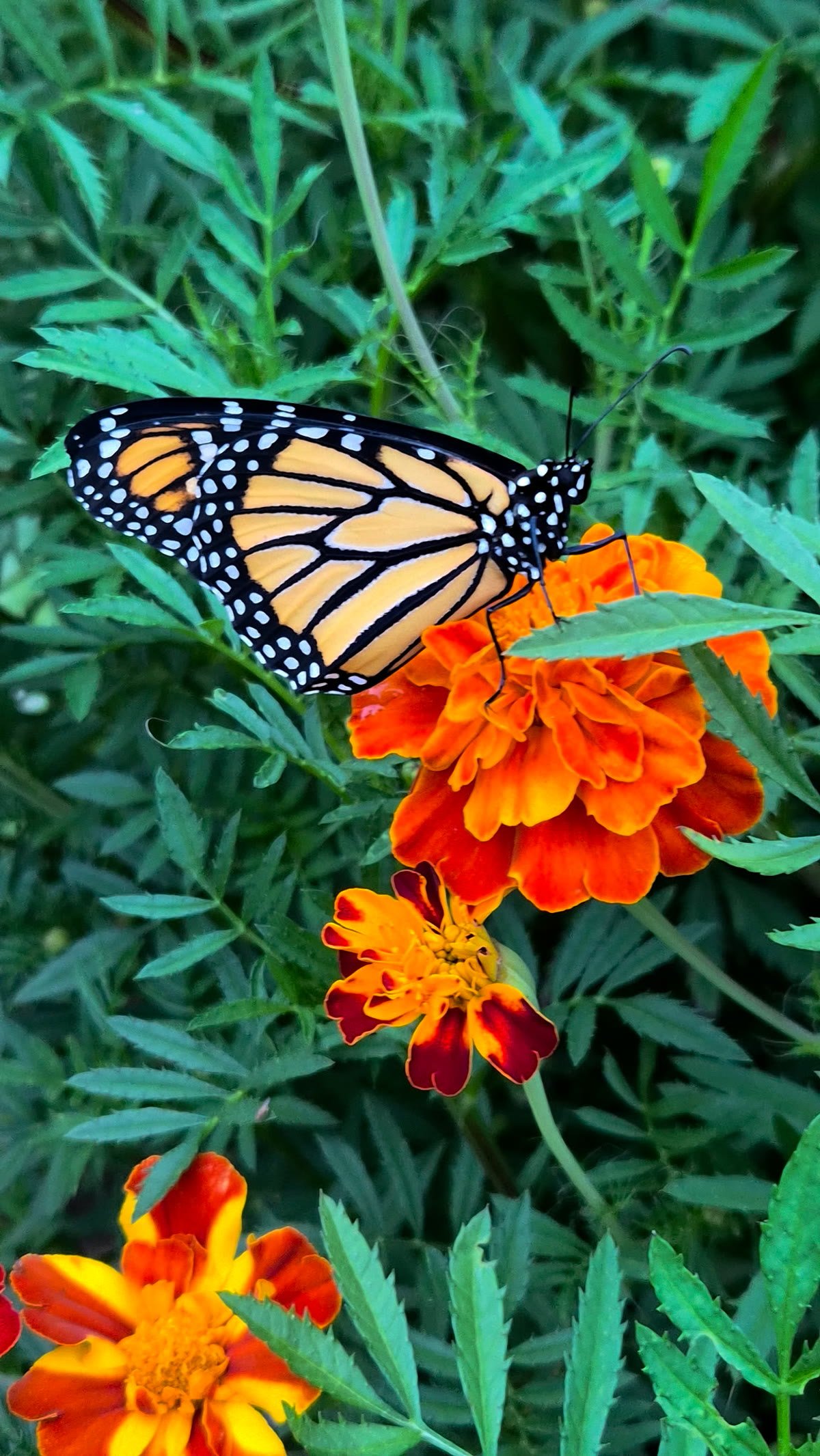
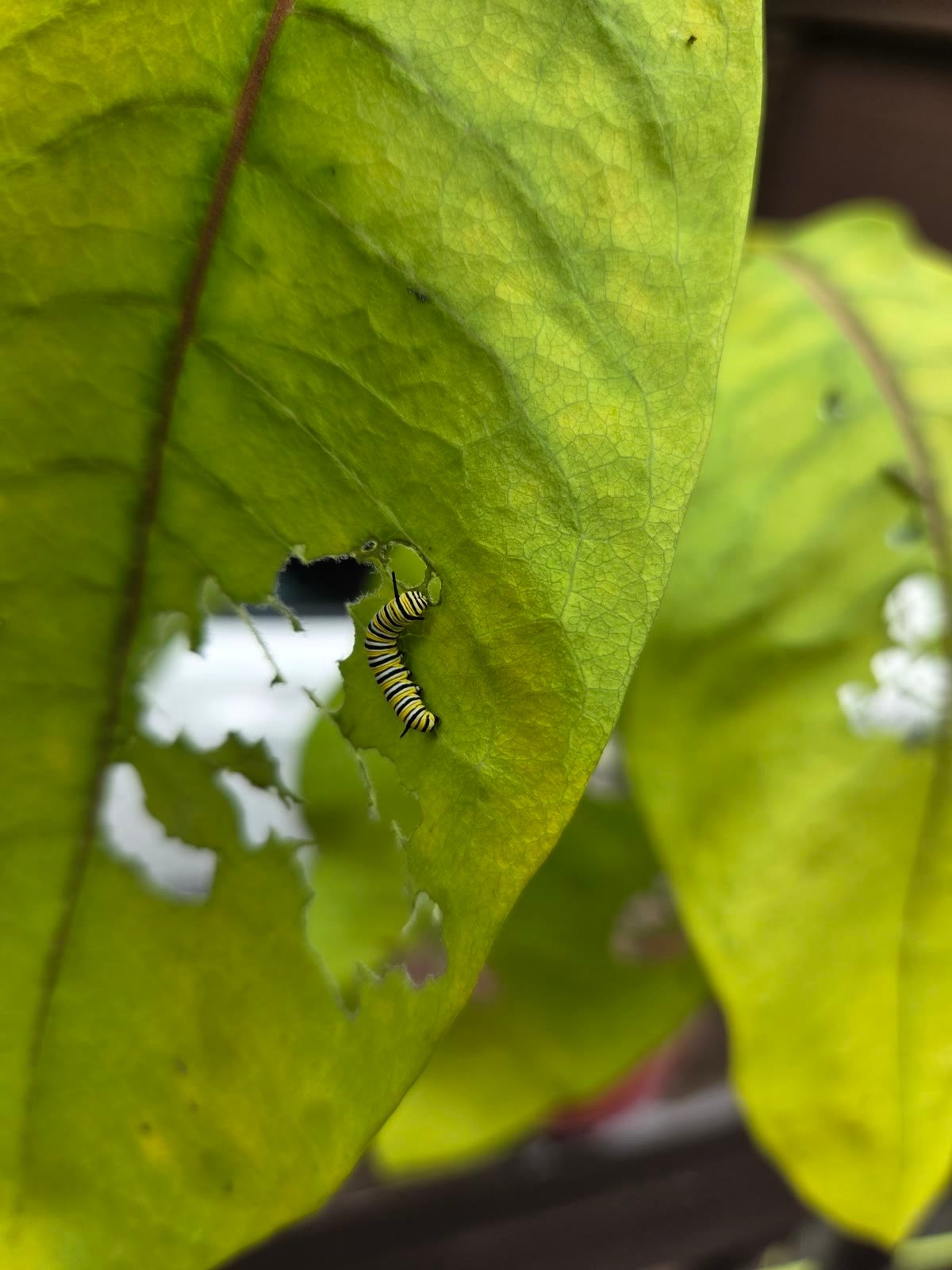
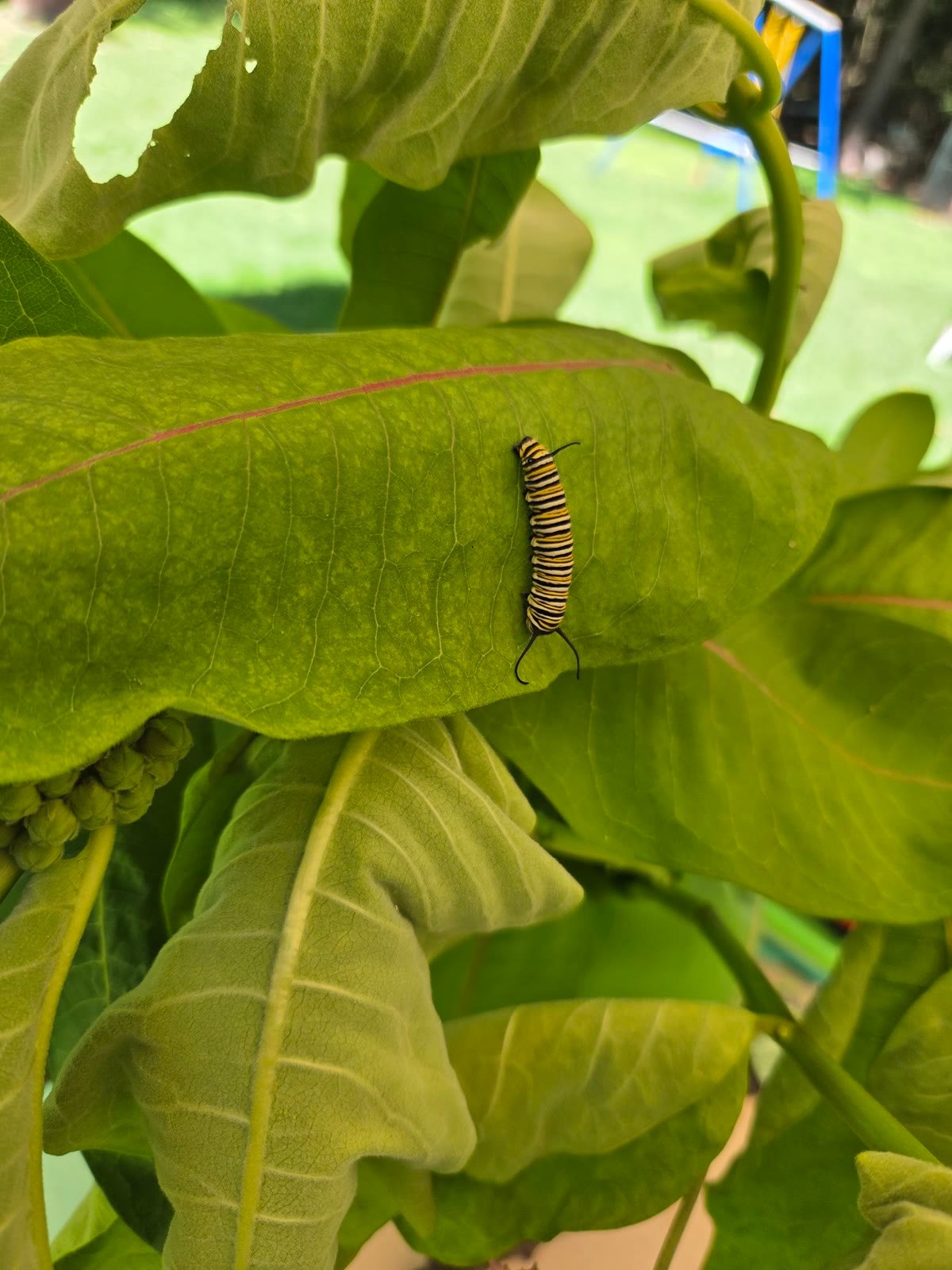
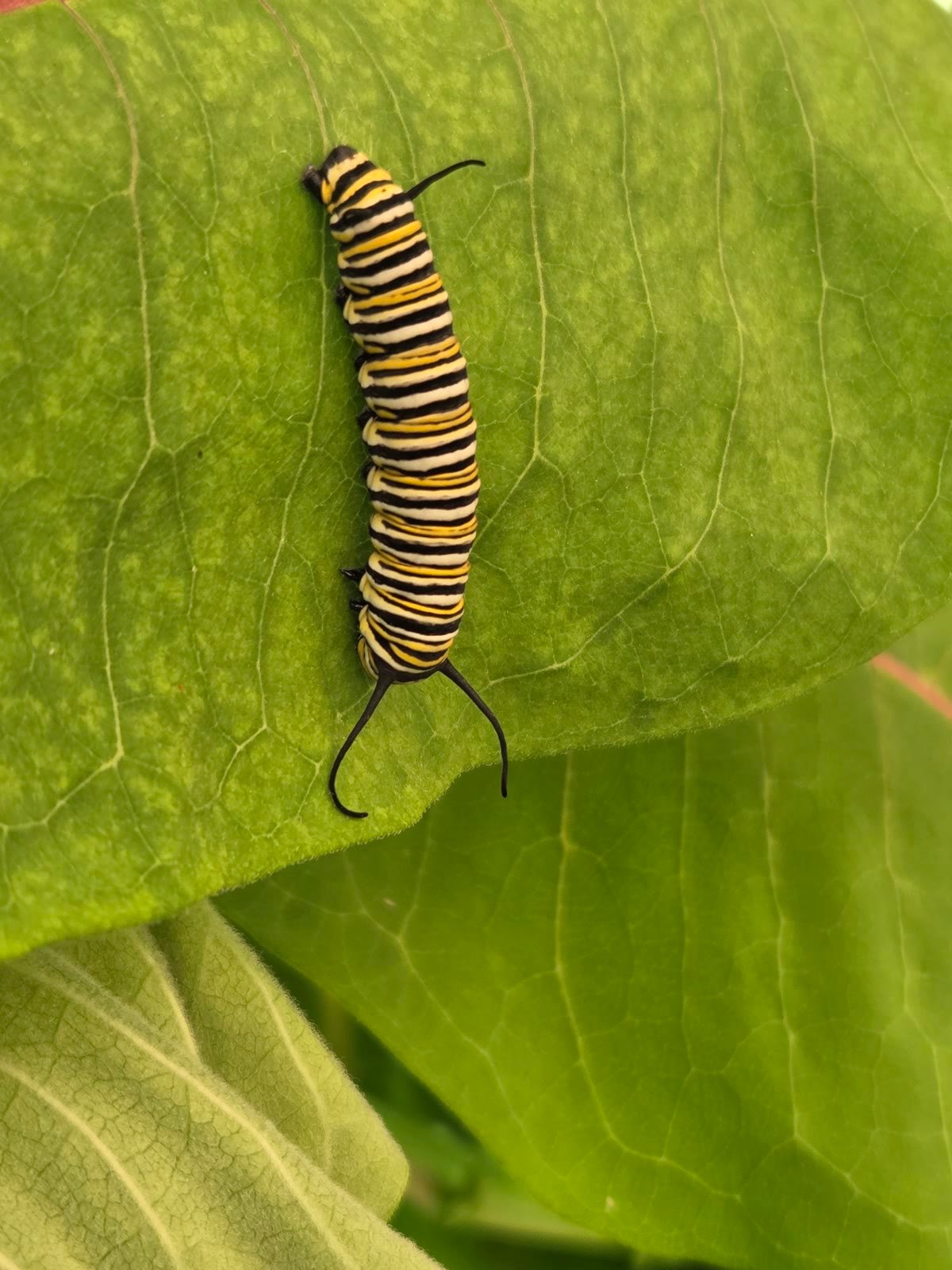
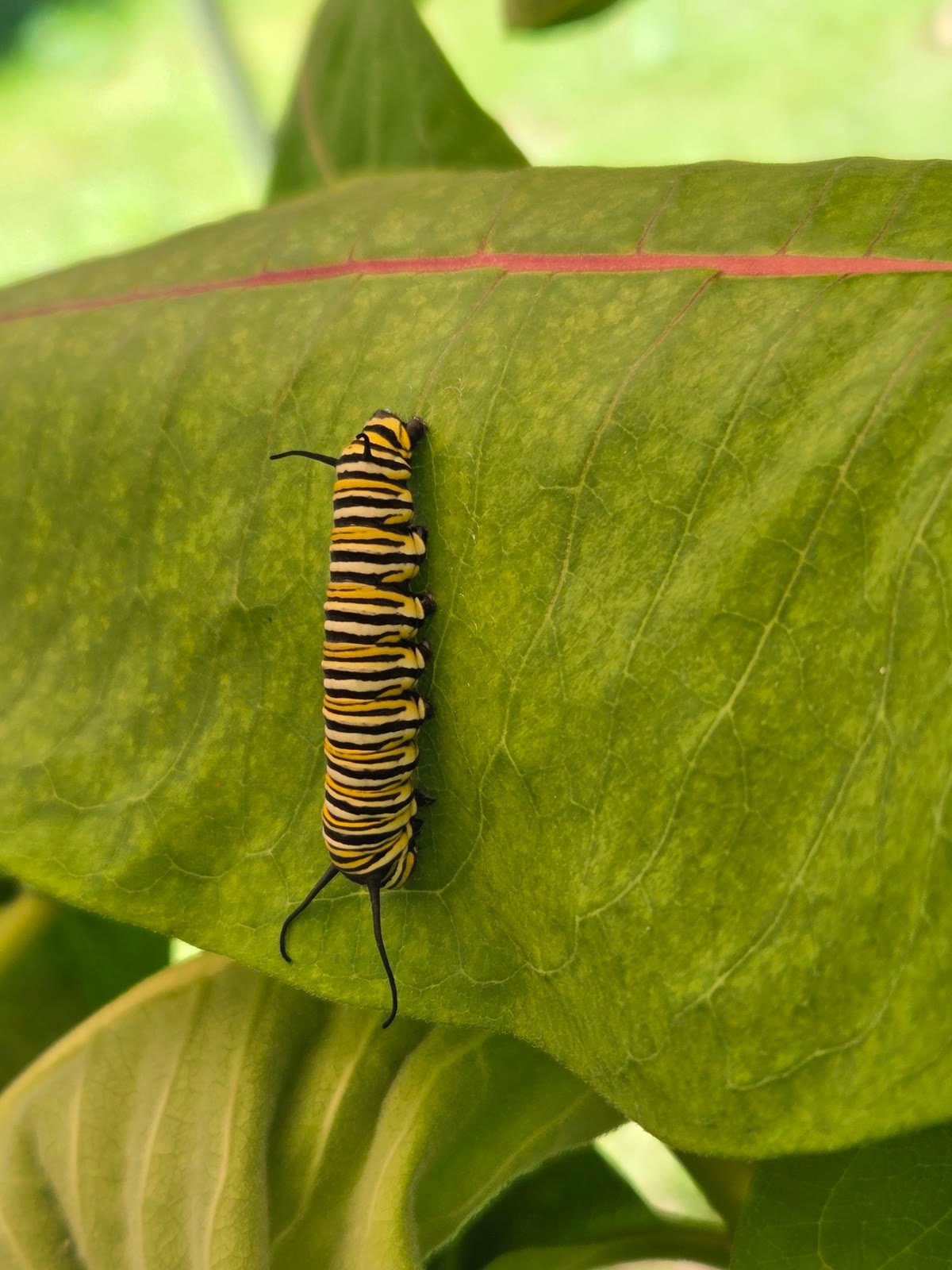
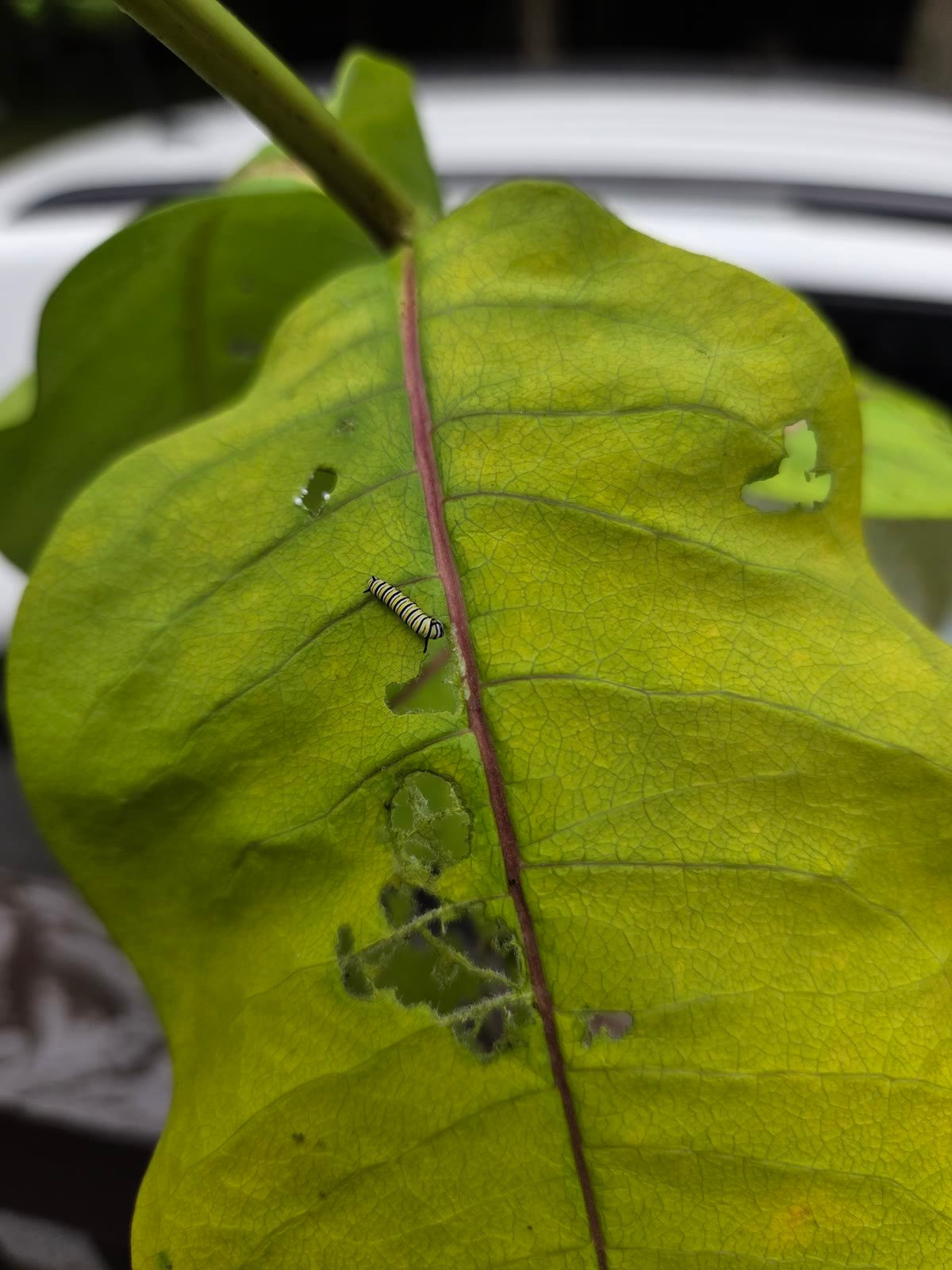
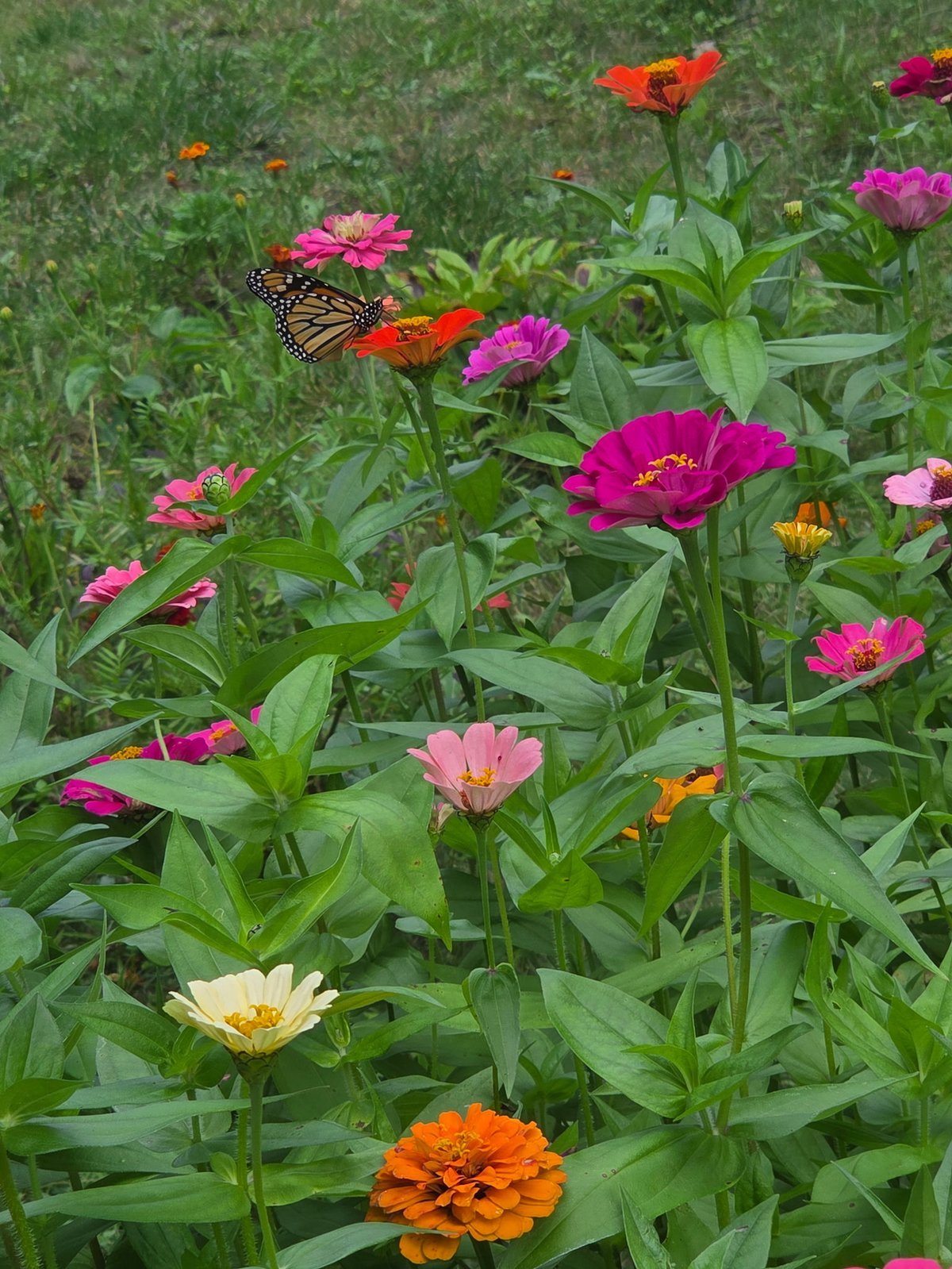
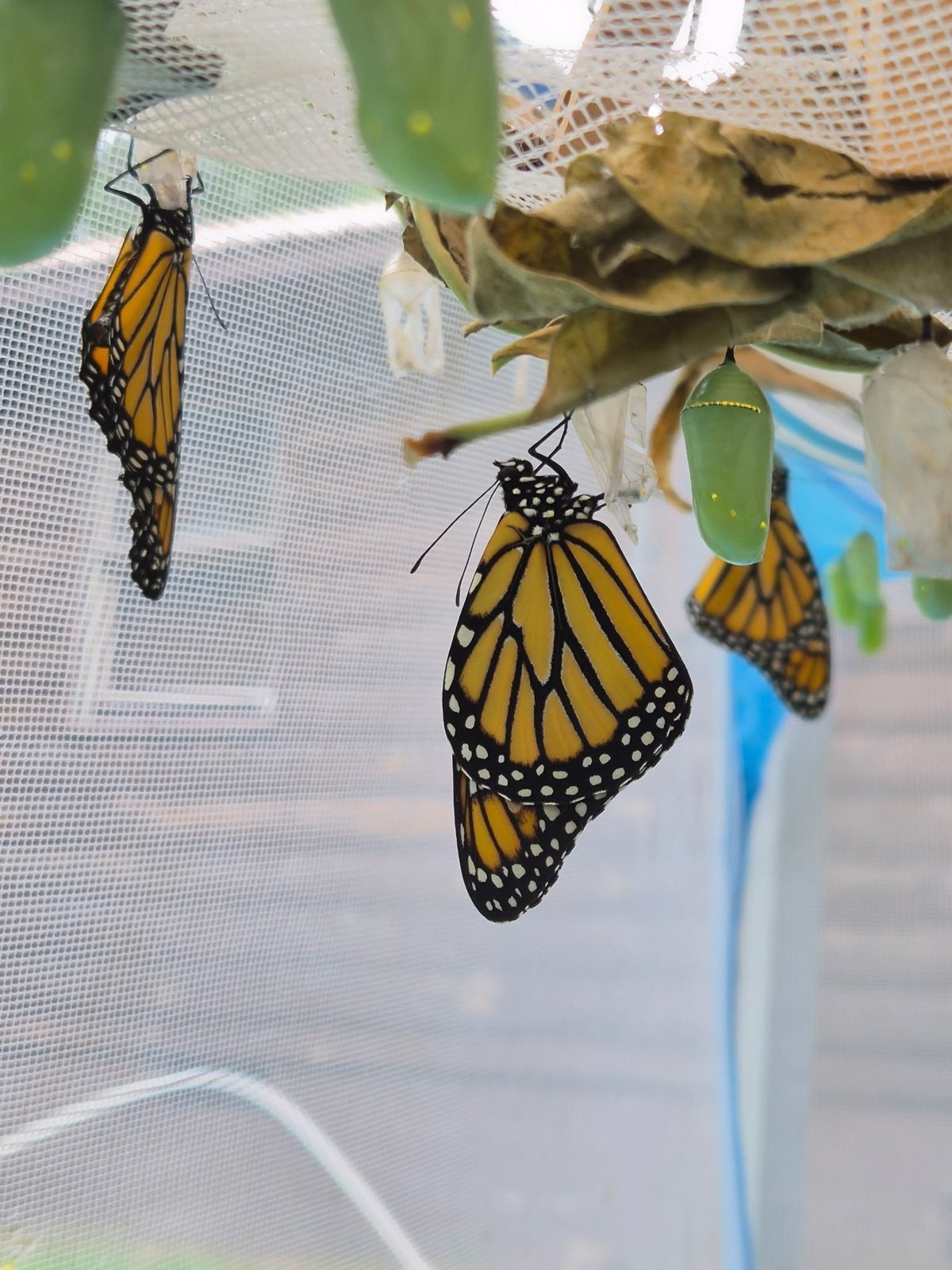
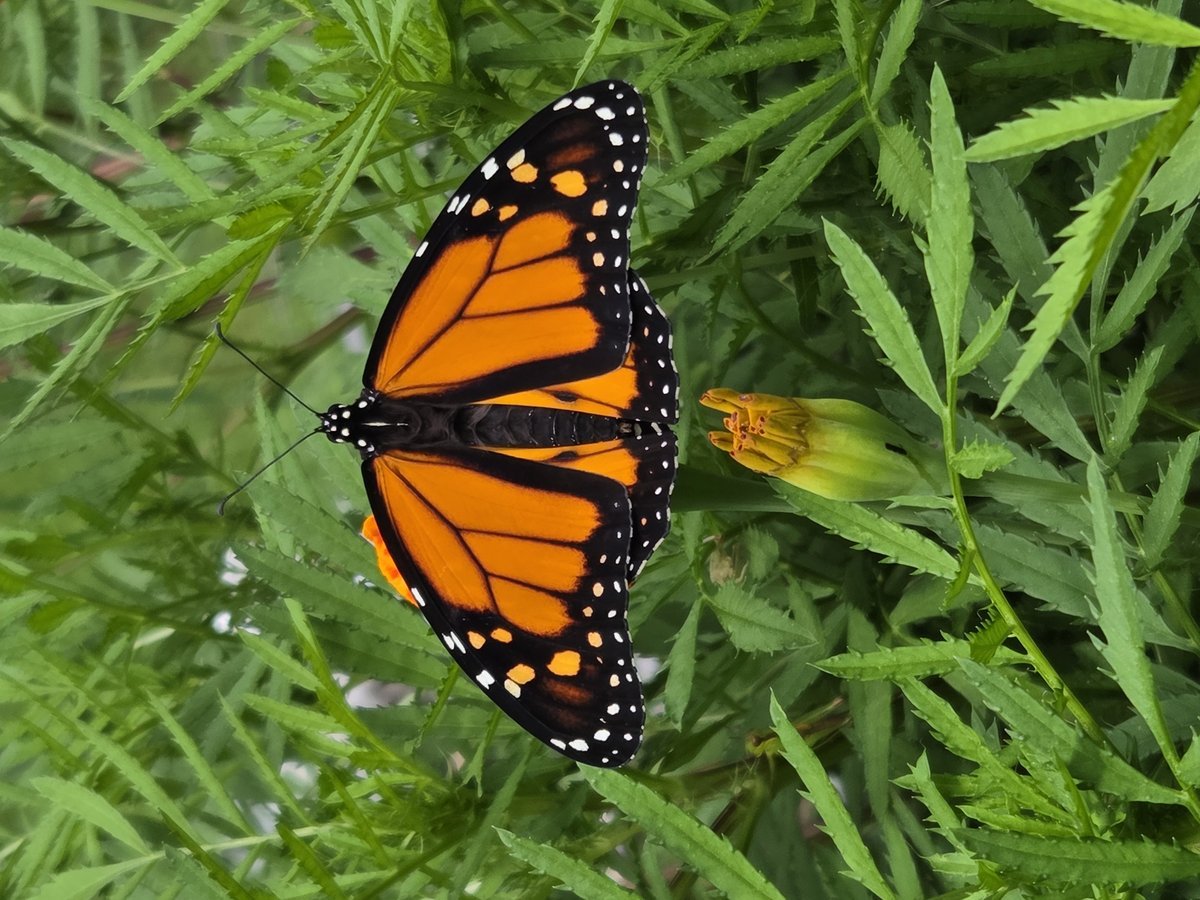
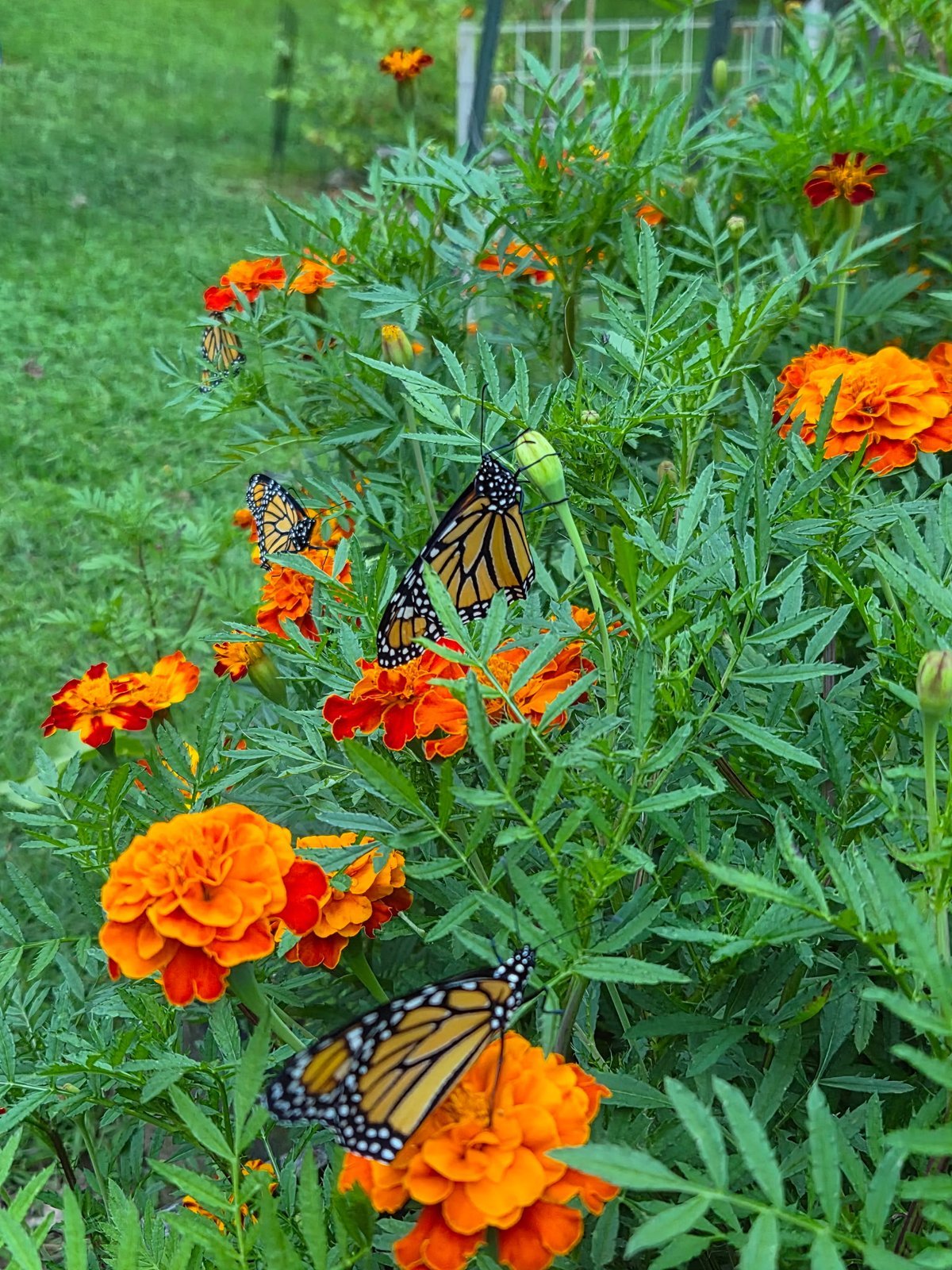
See all of Marissa’s monarch photos and videos — the complete set she shared with us, including every photo and video from her six summers of raising monarchs.