
On Saturday morning, a propane explosion on Carr Road in the town of Clayton sent one person to the hospital.
Three days earlier, a furnace explosion destroyed a trailer home in Antwerp — thankfully, nobody was hurt.
Two incidents in one week, both tied to the equipment that keeps North Country homes warm.
Heating season is here. Whether you burn wood, pellets, oil, propane, or kerosene — or just plug in a space heater on the coldest nights — this is the week to make sure your home is ready. Here is a practical heating-season fire prevention and safety checklist, organized around what is actually in North Country houses, plus the carbon monoxide risks that come with every fuel type.
On this page:
Start with the basics: alarms and an escape plan · Wood stoves & fireplaces · Pellet stoves · Oil, propane & natural gas furnaces · Kerosene & portable space heaters · Electrical: the system behind the walls · Carbon monoxide: the invisible risk · A North Country reality check · FAQ
Start with the basics: alarms and an escape plan
Do these first — they protect you no matter what heats your home.
- Smoke alarms on every level, inside each bedroom, and outside each sleeping area. Test them monthly and replace them every 10 years.
- Carbon monoxide alarms outside each sleeping area and on every level of the home. Under New York’s Amanda’s Law, homes with fuel-burning appliances, fireplaces, or attached garages are required to have them. CO alarms wear out — most last about 5 to 7 years, so check the date stamped on yours.
- Make a home escape plan: two ways out of every room, a meeting spot outside, and practice it once. It takes ten minutes.
The national numbers explain why this matters: U.S. fire departments respond to an estimated 37,000 home heating-equipment fires a year (2020–2024 average), causing about 417 deaths annually, according to the National Fire Protection Association. And the CDC reports more than 400 Americans die each year from unintentional carbon monoxide poisoning not linked to fires, with over 100,000 emergency department visits.
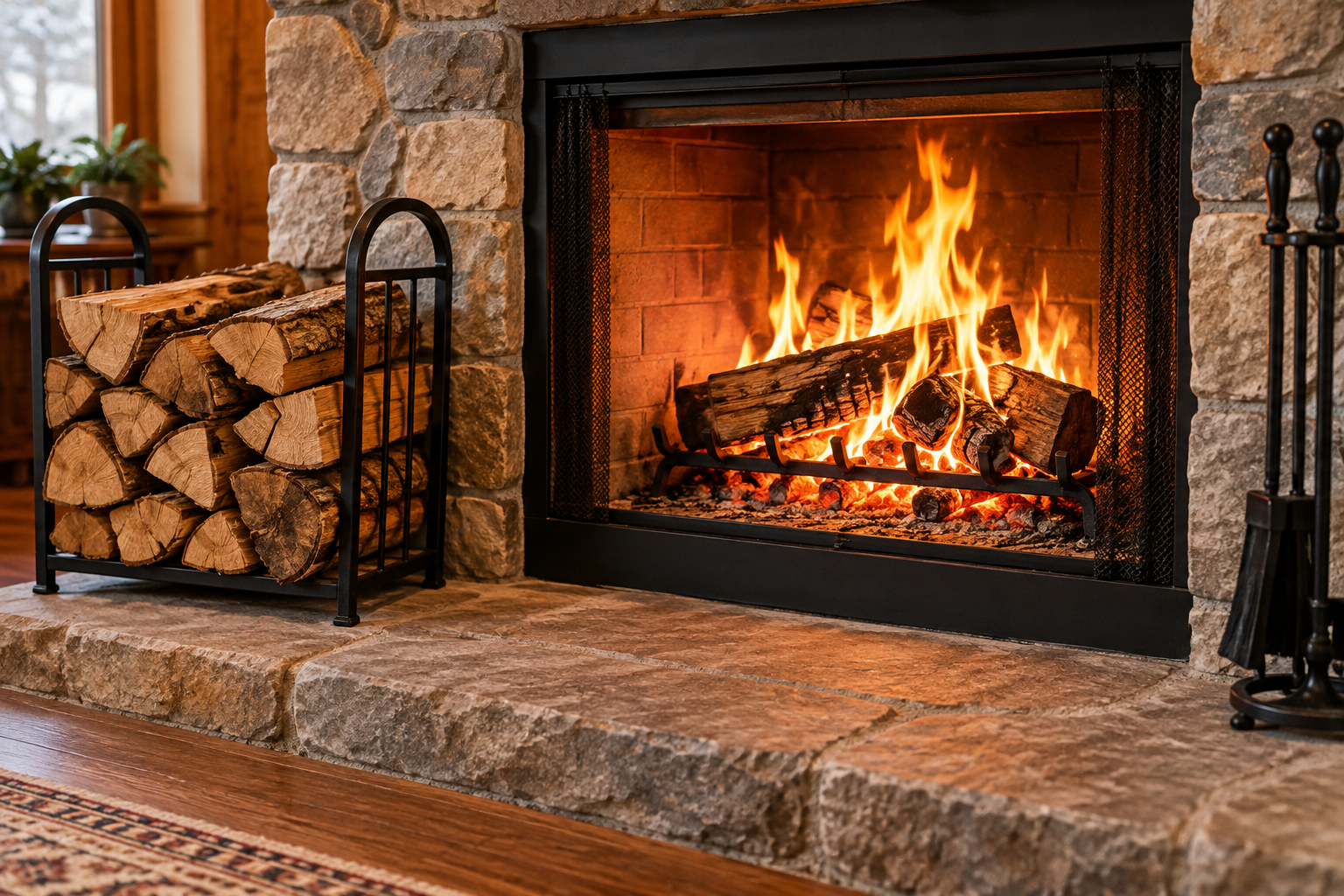
Wood stoves & fireplaces
Wood heat is a way of life up here — and chimney fires are its signature risk.
- Have your chimney swept and inspected every year before the first fire. Creosote buildup is the leading cause of chimney fires, per the NFPA.
- Burn only dry, seasoned wood. Wet or green wood burns cooler, makes more creosote, and produces more carbon monoxide.
- Put ashes in a metal container with a tight lid, stored outside and well away from the house. Ashes can stay hot enough to start a fire for days.
- Keep fireplace screens or glass doors in place, and keep furniture, firewood, and everything flammable at least 3 feet from the stove or hearth.
Pellet stoves
- Have pellet stoves professionally installed with proper venting, and follow the manufacturer’s clearance distances.
- Burn only the grade of pellets your stove is designed for, and clean the burn pot and ash traps on the schedule in your manual.
- Store pellet bags somewhere dry and away from the stove — not stacked against it.
- Keep a working CO alarm in the same area. Pellet stoves are efficient, but a venting failure can still send carbon monoxide indoors.
Oil, propane & natural gas furnaces
- Get your furnace or boiler serviced by a professional every year before heating season. The Antwerp explosion happened while people were working on a furnace — annual service catches the problems you cannot see.
- If you smell gas (a rotten-egg odor): do not flip light switches, do not light anything, get everyone out of the building, and call 911 from outside.
- Keep the area around the furnace clear of storage, and change filters on schedule so the system is not straining.
- If you heat with propane, make sure everyone in the household knows where the tank shutoff valve is.
Kerosene & portable space heaters
- Respect the numbers: space heaters and heating stoves account for roughly a third of home heating fires but nearly three-quarters of heating-fire deaths (NFPA, 2020–2024). The 3-foot rule is the whole game — keep anything that can burn at least 3 feet away.
- Kerosene heaters: burn only K-1 grade kerosene, refuel outdoors only when the heater is cool, and never fill it while it is running or still hot.
- Electric heaters: plug directly into a wall outlet — never an extension cord or power strip — and turn the heater off when you leave the room or go to sleep.
- Use heaters with tip-over shutoff and overheat protection. Retire the ancient ones that lack them.
Electrical: the system behind the walls
Saturday’s fire on South Hamilton Street in Watertown damaged the home’s electrical system near the main panel — the cause is still under investigation, and one occupant was treated for smoke inhalation. Either way, it’s a reminder that the wiring you never see deserves attention too.
- Know where your main electrical panel is and keep it accessible — not buried behind storage.
- Watch for warning signs: flickering lights, outlets or switches that feel warm, a burning smell with no obvious source, or breakers that trip again and again. Any of these means call an electrician.
- Don’t overload circuits. Space heaters draw a lot of power — give them a dedicated circuit, never a power strip crowded with other devices.
- Much of the North Country’s housing stock is old. If your wiring hasn’t been looked at in years, an electrician’s once-over is cheap insurance.
Carbon monoxide: the invisible risk
- CO is colorless and odorless, and its symptoms mimic the flu: headache, dizziness, weakness, nausea, confusion. If several people — or your pets — feel sick at the same time, get outside immediately and call 911.
- Generators: run them at least 20 feet from the house with the exhaust pointed away — never in a garage, basement, or near windows, even with the door open. Outage season overlaps heating season in the North Country, and generator CO deaths spike during power outages.
- Never use a gas oven or stovetop to heat your home, and never leave a car running in a closed garage.
- If your CO alarm sounds: get everyone outside first, then call 911. Do not go back inside to open windows.
A North Country reality check
Most fire protection in the tri-county area is volunteer, and rural response times are longer — especially in bad weather. Fire prevention is not just good advice here; it is the whole game.
Two small things that help your local department help you: learn your fire district’s non-emergency number, and make sure your house number is clearly visible from the road, day and night.
FAQ
How often should I have my chimney cleaned?
At least once a year, before heating season starts — that is the NFPA recommendation. If you burn wood as your primary heat, a mid-season check is worth it.
Where should carbon monoxide detectors go?
Outside each sleeping area and on every level of your home, per the NFPA. New York law requires CO alarms in homes with fuel-burning appliances, fireplaces, or attached garages.
How far from the house should a generator be?
At least 20 feet, with the exhaust pointed away from the house, per the CDC. Never run one indoors, in a garage, or near open windows.
What should I do if I smell gas in my home?
Do not touch light switches or appliances, do not light anything, get everyone out, and call 911 from outside the building.