
Why Black Lake Is Called “Nature’s Fish Hatchery”
Black Lake runs about 20 miles long through the towns of Hammond, Morristown, Oswegatchie, Macomb, Rossie, and DePeyster, paralleling the St. Lawrence River a few miles to the north. At roughly 8,352 acres with more than 60 miles of shoreline, it’s the largest lake in St. Lawrence County — and it’s known across the region as “Nature’s Fish Hatchery”, the largest and most diverse of the Indian River lakes.
The nickname is earned. The lake is relatively shallow and warm, with extensive weed beds, rocky points and shoals, sandbars, islands, and deep water reaching about 40 feet. Wind constantly mixes the water, keeping oxygen levels high, and the big weedy bays shelter each year’s hatch of fry. There is no industry on the lake, and Black Lake carries no fish consumption advisories — a point of pride you’ll hear from locals.
One honest caveat: the same weed growth that makes the lake so productive includes invasive Eurasian watermilfoil, which forms dense mats that hurt water quality and boating. Local groups and the county have spent years fighting it — a 2012 state grant of $50,000 went to combat the weeds — and boaters are expected to do their part (more on that below).
For anglers in Jefferson County and soldiers at Fort Drum, Black Lake is the closest thing to a legendary home water — a short drive north, and a lake that genuinely lives up to its reputation.
On this page
- Why Black Lake Is Called “Nature’s Fish Hatchery”
- What You’ll Catch and When
- Regulations: Read This Before You Launch
- Public Boat Launches & Lake Access
- Black Lake Quick-Reference Table
- Local Tips for a Better Day on the Water
- Ice Fishing on Black Lake
- Frequently Asked Questions
- Why This Guide Exists
What You’ll Catch and When
Largemouth & Smallmouth Bass
Bass are the lake’s headliners. Black Lake has a devoted bass following and hosts frequent local tournaments — on summer weekends, expect company at the launch. Largemouths hold in the thick lily pads, milfoil beds, and weedy bays; smallmouths prefer the rocky points, island drop-offs, and mid-lake shoals. Topwater frogs over the mats on hot mornings, Texas-rigged soft plastics, spinnerbaits, and live crayfish all produce. Remember the special Black Lake rule: 15-inch minimum, 5 fish per day for both largemouth and smallmouth — the size minimum is stricter than the county-wide 12-inch rule, while the creel limit matches it. (per local sources).
Walleye
Black Lake was once one of the country’s premier walleye lakes, then the population crashed in the 1960s and ’70s. Decades of stocking and spawning-ground work by the Black Lake Association, the Black Lake Fish and Game Club, and the DEC have brought it back — 6-pound walleye are common again, and fish pushing 9 pounds show up (2023 Black Lake Association walleye evaluation). In late April, walleye stage spawning runs up the Indian River and Fish Creek. Most walleye anglers troll crawler harnesses or diving minnow plugs, or cast bucktail jigs tipped with crawlers.
Northern Pike
Pike prowl the same weedy bays as the largemouths, and they hit hard. Spring, right after ice-out, is prime time — big females cruise the shallows. Spoons, spinnerbaits, and live shiners under a bobber are all proven.
Black Crappie & Panfish
The spring crappie run is one of the lake’s signature events — as soon as the ice goes out and water temperatures cross about 50°F, crappie stack into shallow bays, brush piles, and around docks, drawing anglers from well beyond the North Country. Small live minnows, marabou jigs, and tube baits under a slip bobber are the standard approach. Bluegill, yellow perch, rock bass, and brown bullhead round out the panfish action, and there’s a legitimate fall crappie bite too. Old-timers will also tell you the lake once gave up some very large muskies.
Regulations: Read This Before You Launch
Black Lake has rules on top of the statewide regulations, and they change — always confirm the current season in the DEC freshwater fishing guide or the HuntFishNY app before you go.
- Bass (largemouth & smallmouth): 15-inch minimum length, 5 fish per day on Black Lake (June 15 through November 30; no bass fishing at all outside the season, including catch and release). The size minimum is stricter than the county-wide 12-inch rule — the creel limit matches it — and it’s the one visiting anglers most often miss.
- Walleye: The Indian River carries special walleye regulations (18-inch minimum, 3 per day, May 1 through March 15). Note that the DEC has proposed regulation changes that would move the walleye/pike closing date from March 15 to March 1 and simplify some special regulations — check the current guide, because this page may be out of date by the time you read it.
- Spawning closures — no fishing March 16 through April 30:
- Fish Creek (St. Lawrence County): from the west (downstream) side of the State Route 58 bridge upstream to Fish Creek Falls at Pope Mills.
- Indian River: from the west (downstream) side of the County Route 8 bridge at Rossie upstream to Rossie Falls.
- License: A New York State freshwater fishing license is required; no special Black Lake permit exists.
- Ice shanties must be off the ice by March 15 statewide.
Public Boat Launches & Lake Access
- New York State Parks launch, Morristown (east shore): OPRHP concrete ramp off County Route 6 (the Hammond–Edwardsville road), about 2 miles west of Edwardsville — roughly 6 miles north of Hammond via Lake Street/Route 6. Hard-surface ramp, free, parking for 55 cars/trailers — the premier public launch for bass boats and pontoons. Boarding docks upgraded ~2016 for seasonal water-level swings. Address: 26 1st St. Arrive early on tournament weekends.
- Fish Creek hand launches (Pope Mills area): Two carry-in options for canoes, kayaks, and small boats — one on Route 58 about a quarter-mile south of the Route 58/184 intersection, and a gravel access road just off Route 184. Good entry points for the creek and the lake’s southern bays.
- Shore fishing: Public shore-fishing areas exist around the lake, and the weedy bays near the launches are fishable on foot.
- Rentals: Many of the lake’s marinas, motels, and campgrounds rent boats and motors, and most have fish-cleaning stations and freezer space.
If your trip extends beyond Black Lake to bigger water, see our Best Lake Ontario Boat Launches in Jefferson County guide.
Black Lake Quick-Reference Table
| Target Species | Best Window | Lures & Baits | Where to Find Them |
|---|---|---|---|
| Black crappie & panfish | April–May (ice-out); fall bite too | Live minnows, marabou jigs, tube baits under a slip bobber | Shallow weedy bays, brush piles, docks — once water hits ~50°F |
| Largemouth bass | June–September | Topwater frogs, Texas-rigged plastics, spinnerbaits | Lily pads, milfoil beds, weedy bays |
| Smallmouth bass | June–September | Tube jigs, drop-shot, live crayfish | Rocky points, island drop-offs, mid-lake shoals |
| Walleye | Late April–May; fall | Crawler harnesses, diving minnow plugs, bucktail jigs | Indian River and Fish Creek mouths in spring; deeper structure later |
| Northern pike | April–May; fall | Spoons, spinnerbaits, live shiners | Weedy bays and creek mouths |
Regulations note: bass 15″ minimum / 5 per day on Black Lake (June 15–Nov 30); tributary closures Mar 16–Apr 30 (see above). Confirm current rules in the DEC guide or HuntFishNY app.
Local Tips for a Better Day on the Water
- Bait is easy to find. Tackle and bait shops are thick around the lake — anglers joke there’s one every half-mile — and most sell licenses too.
- Clean, drain, dry. Black Lake has zebra mussels, Eurasian watermilfoil, curlyleaf pondweed, and European frogbit. A boat steward program inspects launches in season. Pull the plug, drain the livewell, and rinse off before you leave — it’s the price of keeping the “fish hatchery” healthy.
- Watch the weather. The lake is long and exposed; a summer squall can build fast. If you’re heading out in shoulder seasons, our Jefferson County Winter Survival Guide covers vehicle and gear prep for rapid weather shifts.
- PFDs, November through April. From November 1 to May 1, everyone aboard a pleasure vessel under 21 feet must wear a personal flotation device while underway. It’s the law, and the water is lethally cold.
- Tournament weekends are busy. If you’d rather have the lake to yourself, fish weekdays or the far northern bays.
Ice Fishing on Black Lake
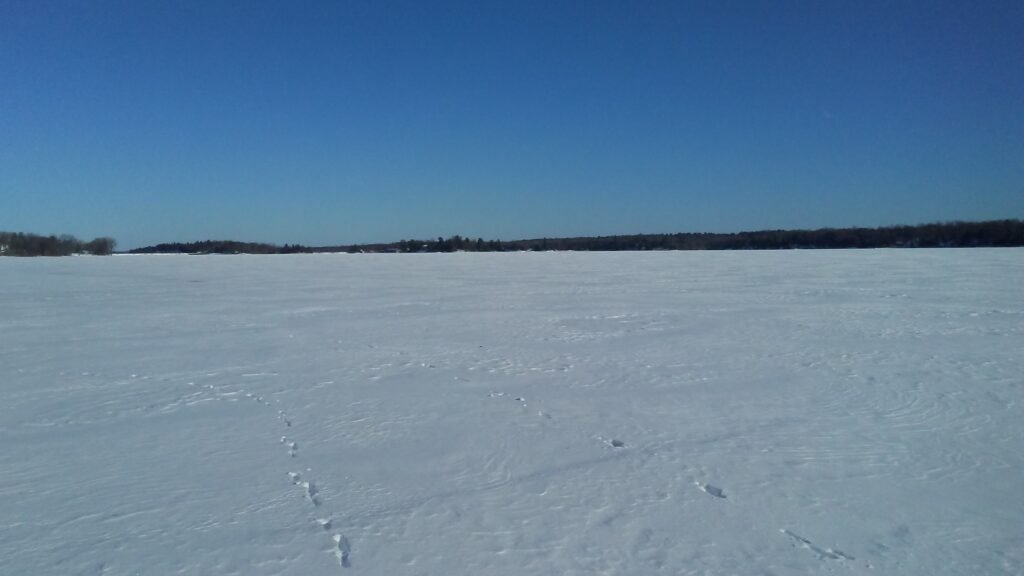
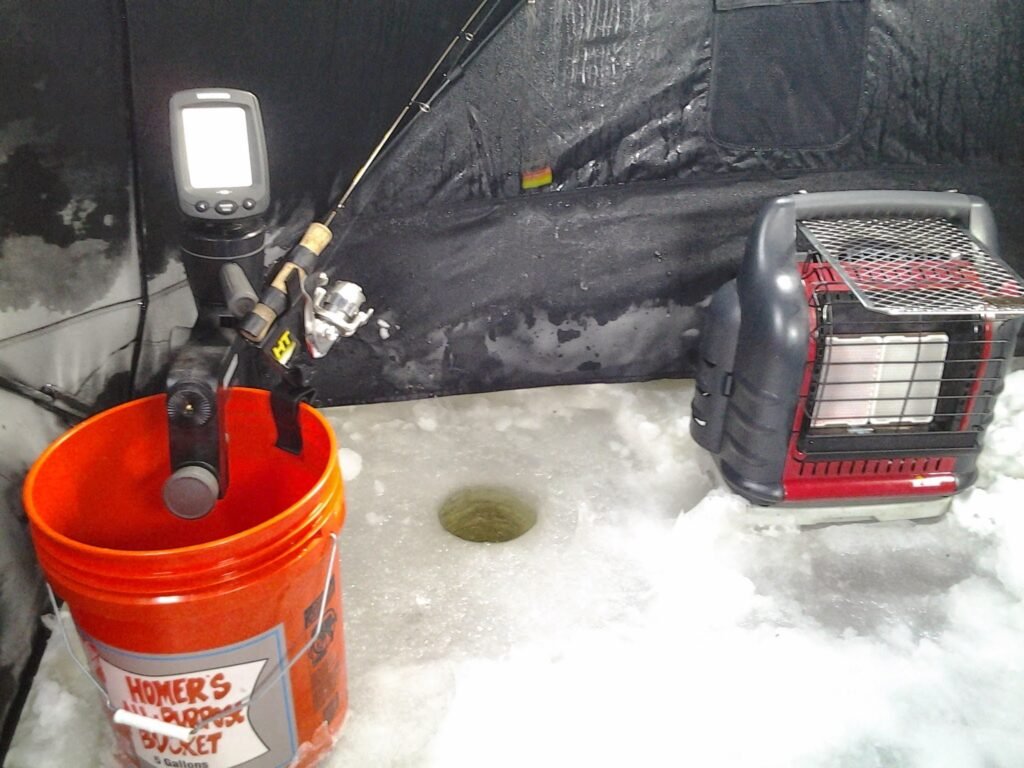
Black Lake is one of the North Country’s most popular ice-fishing lakes — crappie, pike, and walleye (in season) all bite through the ice, and the shallow bays freeze early. Standard cautions apply: no ice is ever guaranteed safe, check thickness as you go, and remember that ice shanties must be removed by March 15. Walleye season is closed March 16 through April 30, so late-season ice anglers should know exactly what they’re targeting.
Frequently Asked Questions
- Do I need a special permit to fish Black Lake?
No — just a standard New York State freshwater fishing license. There is no Black Lake-specific permit, but the lake does have special bass size and creel limits (15 inches, 5 per day). - Where can I rent a fishing boat on Black Lake?
Many marinas, motels, and campgrounds around the lake rent boats and motors, and most offer docks, fish-cleaning stations, and freezer space. The state launch at Morristown is a free public option if you bring your own boat. - Is ice fishing popular on Black Lake?
Very — it’s one of the region’s top ice-fishing destinations, especially for crappie and pike. Shanties must be off the ice by March 15, and walleye season closes March 16. - When is the best crappie fishing?
Right after ice-out in April and May, when crappie move into shallow bays and stack around brush piles and docks. There’s also a solid fall bite. - Can I eat what I catch?
Black Lake has no fish consumption advisories, which is unusual and worth knowing. Standard statewide guidance on cleaning and preparation still applies.
Why This Guide Exists
Black Lake draws thousands of anglers to the North Country every year and generates an estimated $7 million in annual tourism spending — but the lake’s best information lives in forum threads and scattered DEC PDFs. This guide puts the species, the special regulations, and the public access points in one place, verified against official sources. Regulations change, so treat the DEC’s current freshwater fishing guide and the HuntFishNY app as the final word.